Walking Through the Emerald Tiers of Tegallalang
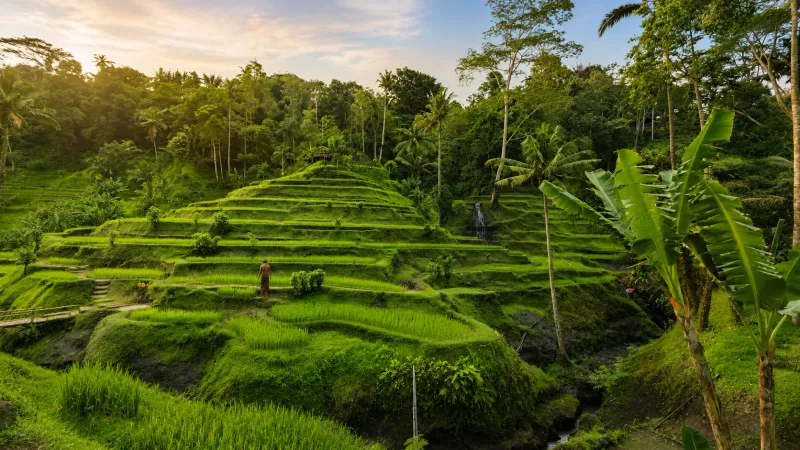
There is a specific moment in the early morning when Tegallalang feels entirely detached from the modern world. Before the tour buses line the narrow road from Ubud, the valley is remarkably quiet. The morning mist hangs low over the ridges, and the air smells of wet earth and sweet wild grass. Walking down the narrow dirt paths, you quickly realize these terraces are far more than a backdrop for a postcard; they are a living, breathing landscape shaped by centuries of human hands.
As you descend into the valley, the scale of the terraces becomes clear. The mud walls form giant, curving steps that follow the natural contour of the land. It is a brilliant design, born out of necessity on Bali’s volcanic slopes. If you look closely at the water trickling from one level to the next, you are witnessing Subak. This traditional cooperative water management system dates back to the 9th century, blending engineering with community spirituality. It is a reminder that this beautiful view is actually a highly functional farm.
Exploring Beyond the Edge
Most visitors snap a photo from the roadside cafes and call it a day. But the real magic happens when you cross the small bridge at the bottom and climb the opposite hillside. The paths can be steep and slippery, but stepping over the narrow ridges gives you a completely different perspective. You might pass local farmers tending to the young crops or carrying heavy bundles of rice stalks on their shoulders. A small donation is often appreciated if you walk through their specific plots, helping support the people who maintain this heritage site.
For those looking for a bit of an adrenaline kick, several swings are set up across the valley, launching riders out over the drop. If that feels too touristy, you can easily find a quiet corner under a palm tree to just sit and watch the light change across the valley.
Planning Your Morning Run
To experience Tegallalang at its best, aim to arrive around 7:00 AM. By 10:00 AM, the tropical sun gets intense, and the quiet atmosphere fades as crowds arrive. The entrance fee is a modest 25,000 IDR, though keeping small cash handy for local trail donations is a good idea. Wear shoes with decent grip, because the clay paths can get quite slick, especially after a brief afternoon shower. It takes about an hour or two to explore comfortably, leaving plenty of time to grab a cold coconut at a local stall before heading back to town.
Yes, if you want to explore the terraces fully. The paths involve steep, narrow dirt steps and can be slippery. However, you can also enjoy great views from the roadside cafes without hiking down.
The swings are operated by different local vendors and are not included in the main entrance fee. Prices usually range from 150,000 IDR to 300,000 IDR depending on the type of swing.
Wear comfortable clothing and sturdy shoes with good grip. Avoid flip-flops if you plan to hike down into the valley, as the clay paths can be muddy and uneven.
The terraces change color based on the harvest cycle. Generally, the fields are a vibrant green in the months leading up to the harvest, typically around March to April and September to October.
Yes, the main road overlooking the valley is lined with cafes and small restaurants offering both local Indonesian dishes and Western food with a view.