
Tegalalang

Tegalalang

Central Bali · Bali

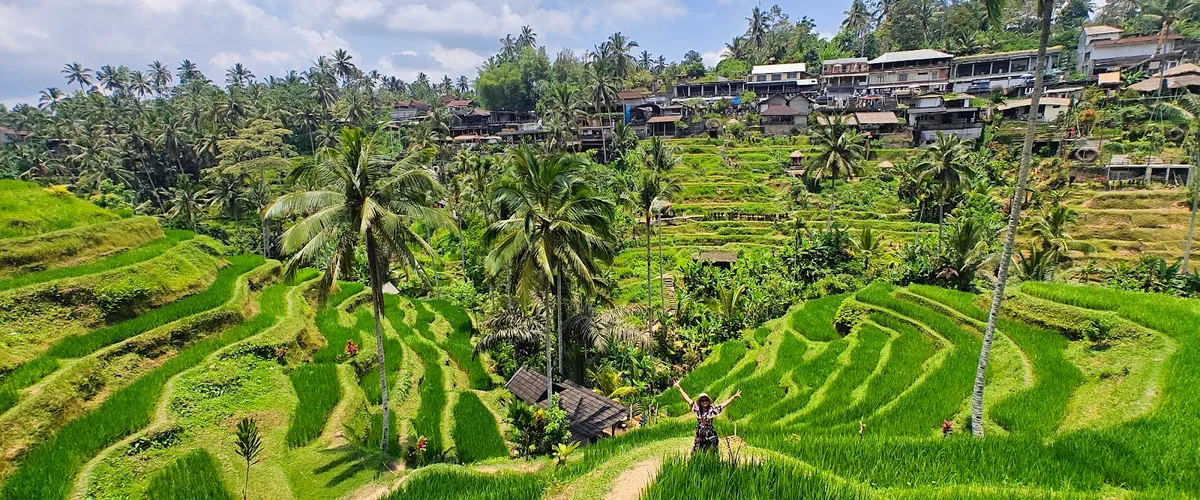
Tegallalang's rice terraces are one of Bali's most photographed landscapes. Cascading stepped fields cover the hillsides in geometric patterns that change color with the growing season [2]. Yes, it's touristy. Yes, it's crowded. But the landscape itself—the scale, the engineering, the visual rhythm—justifies a visit if you're in the Ubud area.

Plan to spend 2-4 hours here. Arrive before 8:00 AM or after 3:00 PM to avoid peak crowds. Walk beyond the main viewpoint if you want calm. Bring water and good shoes if you're hiking the terrace trails. The early morning visit is worth the early start; by 10:00 AM, the experience becomes more about managing crowds than appreciating the landscape.

Quick Facts

📍
Location
Gianyar district, Central Bali. 15 kilometers from Ubud, 55 kilometers north of Denpasar. Well-marked road access.
Central Bali
🌿
Atmosphere
NatureScenic
Best For
CouplesPhotographersHikers
✈️
From Airport
Drive to Ubud (1.5-2 hours from Ngurah Rai Airport), then continue to Tegallalang (30 minutes). Or hire a direct driver from airport to Tegallalang (1.5 hours). Most travelers combine with Ubud activities.
📍 Tegalalang on the Map
Loading map…

Why Visit Tegalalang?

Tegallalang appeals to travelers seeking landscape photography, hikers interested in agricultural systems, and anyone wanting to understand how Bali's terraced fields work.

  • For Photographers: The terraces create natural composition—lines, depth, color changes. Early morning and late afternoon light are ideal. Different seasons offer different colors. You can shoot the same terrace at sunrise with mist, midday with shadows, and sunset with golden light. The challenge is finding angles that don't include crowds or modern infrastructure.
  • For Hikers: Trails run through and between the terraces, descending into valleys and climbing back out. A 2-3 hour loop hike is doable without a guide, though many prefer having someone who knows the paths. The hike is more interesting than standing at the viewpoint.
  • For Those Interested in Agriculture: The subak irrigation system is genuinely sophisticated. Water is shared among multiple farmers according to tradition and need. The timing of plantings is coordinated. Watching this system in action—or asking a farmer to explain it—offers insight into how Balinese agriculture sustained itself for centuries.
  • For Couples: The landscape is romantic. Early morning visits mean fewer crowds and softer light. Walking trails between terraces offers privacy. The swings installed for tourists are tacky, but the actual landscape remains striking.
  • For Those on a Limited Time Budget: If you only have a few hours in the Ubud area, Tegallalang is a straightforward addition—15 minutes from Ubud town, straightforward to reach, rewarding visually without requiring specialized knowledge.

Highlights

Main Areas and Viewing Points

The Main Viewpoint (Tegallalang Terrace Park)

This is the most accessible and crowded spot. A parking area sits above a dramatic section of terraces, with a cafe and souvenir stalls. From here you get the classic overview—the terraces cascading down the hillside in geometric patterns [1]. Early morning (before 7:30 AM) offers empty parking, soft light, and a chance to photograph without crowds. By 9:00 AM, tour buses have arrived. The viewpoint itself is free, but the cafes charge tourist prices (50,000 IDR for coffee that costs 10,000 elsewhere).

The Swing Installations

Several swings have been installed among the terraces for tourist photos. They range from simple rope swings to elaborate wooden structures. The swings are purely for Instagram purposes—they're not traditional, they're not particularly safe, and visiting them requires navigating between actively worked rice fields. If you want to use a swing, hire a local guide who knows where they are and how to access them respectfully without damaging crops.

Tegallalang Village Trails

Beyond the main viewpoint, trails run downhill through the terraces and connect villages. The descent is steep—often 30-40 degree slopes with rice paddies on either side. These trails are less crowded and offer closer views of the terrace detail and water channels. A simple hike might descend 200-300 meters, cross a river or small village, and ascend back to the starting point. Allow 2-3 hours for a moderate loop.

Tegallalang Market and Village

The actual village of Tegallalang operates like most Balinese villages—a market in the morning, local warung restaurants, family homes, and working temples. The market is worth a quick visit if you're in the area early, though it's smaller and less impressive than markets in larger towns. A morning market visit gives you context for the agricultural area you're looking at.

River Valleys Between Terraces

Small rivers and streams run through the terrace system, feeding the irrigation channels. On hikes, these valleys offer moments of relative quiet. You'll see where water is distributed, how the subak system manages flow, and sometimes encounter farmers working near the water source. These quieter areas are rewarding if you're willing to walk beyond the main viewpoint.

Things To Do in Tegalalang

Activities and Strategies

Arrive Early for Photography

Get to the main viewpoint or a trailhead by 6:30-7:00 AM. At this hour, mist often sits in the valleys, light is soft and directional, and you'll have the landscape to yourself. The early visit transforms the experience from crowded commodity to quiet observation. Bring a headlamp or phone light if it's still dark on the roads.

Walk the Terrace Trails

Instead of parking at the main viewpoint and staying put, walk. Trails descend from several access points. The descent is steep and can be slippery after rain, but it's manageable with decent shoes and a reasonable fitness level. You'll pass farmers working, see the irrigation system up close, and reach quieter parts of the landscape. Walking for even 30-45 minutes gets you away from crowds. Allow 2-3 hours for a full loop if you want to include rest and observation time.

Visit with a Local Guide

A guide (arranged through your hotel or by asking at cafes) costs 300,000-500,000 IDR for 2-3 hours. Good guides explain the subak system, identify which crops are growing, show you where to find swings without damaging fields, and take you on less-obvious trails. They also provide context that makes the landscape more interesting than just looking at it.

Visit During Off-Peak Hours

If you can't arrive early, come between 2:00-5:00 PM when tour buses have left and before sunset crowds arrive. Late afternoon light is beautiful—the sun gets lower and casts long shadows that emphasize the terrace shapes. You'll still see people, but it's manageable.

Combine with Nearby Stops

Tegallalang sits between Ubud and several other attractions. A common loop: early morning at Tegallalang (7:00-10:00 AM), lunch in Ubud, afternoon at Ubud Monkey Forest or a temple. Or: Tegallalang in the morning, then drive to Munduk (mountain village, 30 km, 1.5 hours) for a cooler afternoon and different landscape.

Observe the Farming System

If you visit during planting season (roughly January-March), you'll see seedlings being transplanted. During harvest (September-November), you'll see rice being cut and dried. The seasonal changes make repeat visits different. Talking to farmers, if you speak some Indonesian, offers insight into timing, water management, and how the system has changed over recent decades.

Visit a Rice Field Cafe

Some cafes are built directly above the terraces with viewing decks. Prices are high compared to warungs (coffee 40,000-60,000 IDR), but you're paying for the location. These are useful if you want to rest and sit with the view for a while without hiking.

Best Places To Visit Nearby

  • Ubud (art galleries, monkey forest, markets, 15 km south)
  • Ubud Monkey Forest (temple and forest with macaques, 20 km south)
  • Tegenungan Waterfall (waterfall, swimming, 20 km east)
  • Munduk (mountain village, cooler climate, waterfalls, 30 km north)
  • Tampaksiring (royal water palace, temples, 20 km east)
  • Kintamani (volcanic landscape, coffee plantations, 35 km east)

About Tegalalang

Tegallalang: Bali's Iconic Rice Terraces

Tegallalang sits in the Gianyar district, roughly 15 kilometers from Ubud town center and about 55 kilometers north of Denpasar [1]. The name refers to both a village and the extensive rice terrace landscape surrounding it. The terraces themselves are not a single attraction but a working agricultural system that has shaped the terrain for centuries. Farmers here grow rice using the subak system—an ancient irrigation method where water flows downhill through channels, nourishing each terrace level [2].

What makes Tegallalang visually distinctive is the scale and steepness of the terraces. The hillsides drop sharply, and the step-like fields create a rhythmic pattern visible from above and at eye level. The color changes with the growing cycle—bright green when rice is young, golden when mature, and muddy brown after harvest when farmers begin the next cycle [1]. The terraces aren't a preserved historical site; they're active farmland where people work daily. You'll see farmers wading through water, planting seedlings, and harvesting throughout the year.

Why It's Famous

Tegallalang became famous through photography and Instagram. The landscape is genuinely photogenic—the terraces create depth, the light hits differently depending on time of day, and the scale is impressive. Early morning light (6:00-8:00 AM) creates soft shadows that emphasize the terrace contours. Late afternoon light turns the rice golden. These conditions attract photographers, which then attracts tourists hoping to replicate the photos they've seen.

The problem is that fame has altered the experience. The main terrace viewpoint now has a parking lot, multiple cafes selling overpriced drinks, and swings installed specifically for tourists to pose on [1]. Selfie sticks appear by 9:00 AM. Tour buses arrive at 10:00 AM and park along the roads. The site manages several thousand visitors daily during peak season. The terraces themselves remain beautiful, but the atmosphere is decidedly touristy.

That said, if you approach Tegallalang strategically—arriving very early or later in the afternoon, walking away from the main viewpoint, or hiking the terrace trails—you can have a genuinely pleasant experience. The landscape still works. The farmers still work. The system still functions. It's just noisier and more crowded than it was a decade ago.

References

  1. Tegallalang Rice Terraces - Geography and TourismWikipedia - Tegallalang (June 2024)
  2. Subak System - Balinese Agricultural IrrigationUNESCO Bali Subak World Heritage (June 2024)
Pics: BhushanMahajan

🗓 Best Time to Visit

April to October (dry season) offers clearer light and more stable weather. Early mornings year-round provide best light and fewest crowds. May-August peak season means more people but guaranteed sunshine. November-March wet season brings green landscapes and dramatic clouds but increased rainfall and muddy trails. Visit early or late in the day regardless of season.

💡 Local Tips

Getting There: Tegallalang is 15 kilometers from Ubud town center (30 minute drive) and 55 kilometers from Denpasar (1.5 hour drive). By car or hired driver from Ubud: negotiate 300,000-500,000 IDR for the day if you're staying several hours. By minibus (bemo) from Ubud: take a minibus heading toward Kintamani and ask the driver to drop you at Tegallalang (20,000-30,000 IDR, 45 minutes). The road is well-marked, and signage in English is clear.

Parking and Facilities: The main viewpoint parking lot costs 5,000-10,000 IDR for a motorbike, 10,000-20,000 IDR for a car. The lot is large but fills by 9:00 AM. Toilets exist near the main viewpoint (charge 2,000 IDR). Several cafes serve drinks and snacks at tourist prices. There are no facilities on the trails—bring your own water.

Best Time to Visit: Early morning (6:30-8:30 AM) is ideal for light, crowds, and temperature. Late afternoon (3:00-5:30 PM) is second best. Avoid 9:00 AM-2:00 PM when tour buses dominate. Any season works—dry season (April-October) has clearer light, wet season (November-March) has more dramatic cloud formations. The terraces look different in each season (green, golden, muddy), so timing depends on what you prefer to photograph.

Footwear and Preparation: Good hiking shoes or sturdy sandals are essential, especially if you're walking the trails. The terrain is muddy after rain and slippery. Bring 1.5-2 liters of water if you're hiking for several hours—there's no water on the trails. Sunscreen and a hat are important if you're spending time exposed. Insect repellent helps if mosquitoes are active in your season.

Photography Tips: Arrive early to avoid people in your frames. Hike away from the main viewpoint for cleaner compositions. The terrace lines create natural leading lines—use them. Overcast mornings can offer softer, more even light than harsh sunshine. Bring a wide-angle lens if you have one—the scale is hard to capture with telephoto. Drones are technically restricted in some areas (check locally), but early morning before officials arrive, some photographers use them.

Respect for Farmers: This is active farmland. Don't walk on planted fields or damage water channels. If you photograph farmers, ask first. Don't leave trash on trails. If you stop to talk to someone working, be aware you might be interrupting their day. That said, farmers are generally friendly if you approach with respect.

Weather and Road Conditions: During rainy season (November-March), trails can be slippery and muddy. The road to Tegallalang is paved but narrow with motorbike traffic. Drive carefully, especially in rain or darkness. Mist is common in early mornings and evenings—it creates drama in photos but can reduce visibility.

What to Skip: Skip the overpriced cafe food—eat before you come or bring your own snacks. Skip the touristy swings unless you're genuinely interested in the photo (they're tacky and require respecting crop boundaries). Skip visiting between 9:00 AM-2:00 PM unless you enjoy crowds. Skip expecting a quiet, undiscovered experience—come with realistic expectations about tourism impact.