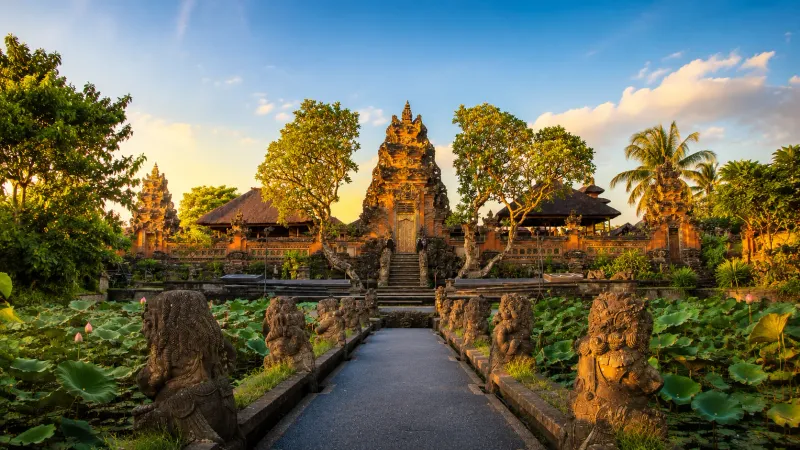
Overview
Pura Taman Kemuda Saraswati sits within a residential neighborhood, functioning primarily as a local worship space rather than a major pilgrimage destination. The compound measures roughly 40 by 30 meters—intimate and deliberately enclosed. Stone gates with carved details mark entry points; the surrounding wall runs at shoulder height, keeping the interior shielded from street noise.
Physical Layout & Architecture
You enter through a narrow gateway. The courtyard opens immediately, with a central shrine (meru) occupying the back third of the space. Paving consists of gray concrete—practical, unmarked by decorative inlay. On either side of the meru, potted shrubs and flowering plants line low stone benches, creating informal seating areas. The main shrine structure displays intricate volcanic stone relief panels, showing scenes from Hindu mythology; age has weathered some edges, though the carving detail remains legible.
A small side structure—likely a wantilan (open-air pavilion)—provides covered space. Corrugated tin roofing protects concrete pillars. Electricity lines feed into the temple, suggesting regular use for evening ceremonies and maintenance.
Cultural Context
Saraswati temples in Bali honor knowledge, arts, and scholarship [1]. This version appears scaled for neighborhood observance rather than regional crowds. Local residents likely gather here during Saraswati Day (falling on different dates annually, following the Balinese lunar calendar) and for regular full-moon ceremonies.
What You'll Encounter
Mornings see temple staff moving through with offerings and water containers. Mid-afternoon brings quietness—few tourists penetrate this far into residential lanes. The air carries incense smoke mixed with damp earth from recent watering of plants. Concrete floors remain cool underfoot even during midday heat.