East Bali hits different. The moment you cross into Klungkung regency, things slow down — temples feel more lived-in, villages still run by centuries-old rules, and you start to realize that Bali has layers most short trips never get to. This one-day tour takes you through three stops that tell completely different chapters of the same island story, and by the time you're heading back to your hotel, you'll have a much clearer picture of what old Bali actually looks like.
First Stop: Kertha Gosa — Bali's Ancient Hall of Justice
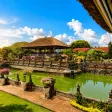
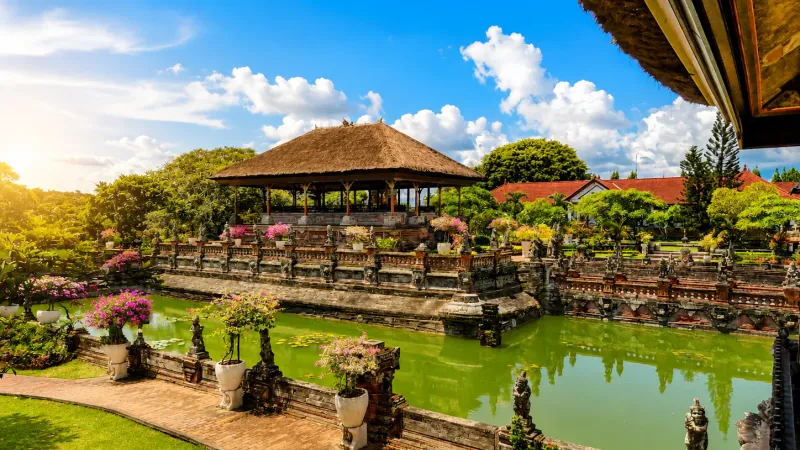
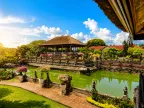
Your morning starts in Semarapura, the main town of Klungkung regency. The highlight here is Kertha Gosa, a royal open-air pavilion that once served as the judicial court of the Klungkung Kingdom. What makes this place genuinely fascinating isn't just the architecture — it's the ceiling.
Look up when you walk in, and you'll see layer after layer of Kamasan-style paintings covering every inch overhead. These paintings depict scenes from Hindu epics and Balinese mythology, but they weren't just decorative. They were shown to defendants during trials, illustrating the consequences of wrongdoing in graphic, unforgettable detail. Essentially an ancient visual deterrent — karma explained through art.
What You'll See at Kertha Gosa
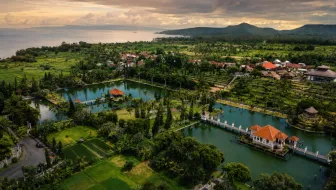
The pavilion sits within a small moat as part of the Taman Gili complex. There's also the Bale Kambang (floating pavilion) nearby, and a small museum that gives you context on the Klungkung Kingdom and the Dutch colonial period that ended its reign. Budget around 45–60 minutes here — it's compact but surprisingly rich in detail once you start looking closely.
Second Stop: Goa Lawah — The Bat Cave Temple
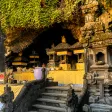
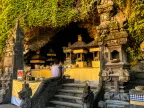
From Klungkung, you'll head east along the coast toward Goa Lawah Temple, one of Bali's six most sacred temples and part of the Sad Kahyangan group — a collection of temples believed to spiritually protect the entire island.
The temple sits at the mouth of a large cave, and inside that cave live thousands of bats. They cling to the walls and ceiling in huge clusters, occasionally sweeping out in slow, sweeping waves. It sounds dramatic, but standing there watching it is actually kind of mesmerizing. The Balinese consider the bats sacred guardians of the temple, and the whole place carries a quiet, heavy energy that's hard to describe until you're actually in it.
What to Expect as a Visitor
You'll need to wear a sarong and sash to enter the temple grounds — these are usually available to borrow at the entrance. The compound is active and used for ceremonies daily, so don't be surprised if you arrive mid-ritual. That's actually a good thing. Watching a genuine Balinese temple ceremony in progress is one of those moments that's hard to plan for but impossible to forget once it happens. The temple faces the sea, so you also get a nice coastal backdrop from the outer grounds. Give yourself around 30–45 minutes here.
Final Stop: Tenganan Pegringsingan — One of Bali's Oldest Villages
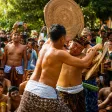
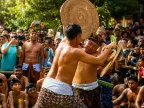
Tenganan is where the day takes a genuinely different turn. This is a Bali Aga village — established before the major wave of Javanese Hindu influence arrived in Bali centuries ago. The Bali Aga people have their own customs, their own social structure, and village laws that have stayed largely unchanged for generations.
The layout itself is distinctive: two long parallel streets with clan compounds on either side, built to a specific traditional plan that hasn't shifted much in centuries. It feels completely unlike any other village you'll pass through in Bali.
The Gringsing Weaving You Won't Find Anywhere Else
Tenganan is one of only three places on earth that produces double ikat fabric, locally known as gringsing. The technique involves dyeing both the warp and weft threads before weaving begins — a process that requires extraordinary precision and patience. A single piece of gringsing can take years to complete. You'll likely see weavers at work inside some of the family compounds, and finished pieces are available for purchase if you want to bring home something genuinely rare.
Lontar Manuscripts & the Village Atmosphere
Some families in Tenganan also practice lontar writing — inscriptions carved into dried palm leaves using a sharp stylus. These palm-leaf books have been used in Bali for centuries to record religious texts, astronomical knowledge, and local histories. Watching someone work on one in real time is unexpectedly meditative. There's a calm in this village that's hard to put into words — give yourself at least an hour here, maybe more if you like to wander slowly.
Good to Know Before the Tour
All three stops sit in or around Klungkung and Karangasem regencies in East Bali. From Kuta or Seminyak, expect roughly 1.5 to 2 hours of driving each way depending on traffic. The route between the three sites is logical and doesn't require backtracking, so you're not wasting time in the car.
Entrance fees are paid on-site at each location and are not included in the tour price — your driver guide will walk you through what's needed at each stop. Have some cash handy, as most fees are very affordable (usually under 50,000 IDR per person per site). East Bali can get warm by midday, so lightweight, breathable clothing and a hat go a long way toward making the day more comfortable.