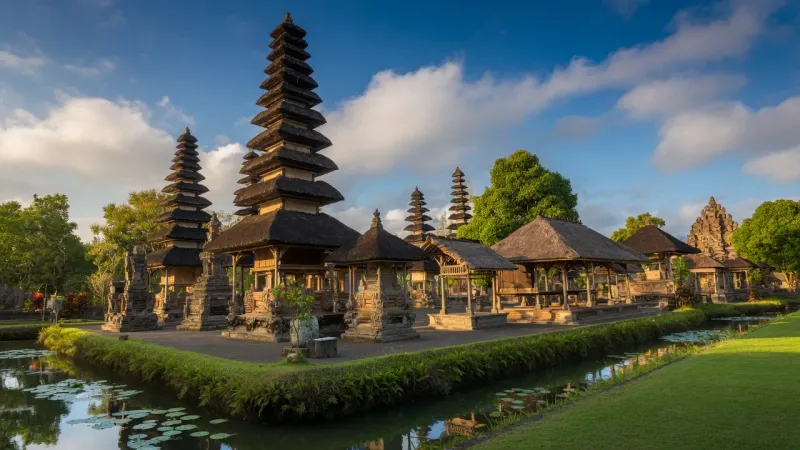
Taman Ayun is one of Bali's most visually striking temples, located in the village of Mengwi about 18km west of Ubud. The name translates to 'beautiful garden temple,' and once you arrive, the name makes immediate sense. The temple sits within a walled compound surrounded by manicured gardens, artificial ponds, and a calm atmosphere that sets it apart from busier tourist attractions.
Built in 1634 by the royal family of Mengwi [1], Taman Ayun serves as the main public temple for the local community and is still an active place of worship. What makes it architecturally distinctive is the collection of multi-tiered shrines, known as meru, that rise dramatically from the grounds. The tallest structure, the main meru, features seven tiers and sits at the temple's heart [1]. Each tier represents different levels in Hindu cosmology, and the precise stacking of wood and stone is a centuries-old craft that requires significant maintenance.
The temple complex is organized in a traditional Balinese layout with several courtyards separated by gates and walls. The outer courtyard is where most visitors gather, offering clear sightlines to the main shrine area. The middle and inner sanctums are more sacred spaces, though visitors are welcome to walk through respectfully. The pond in the front courtyard adds to the serene quality—it's lined with plants and reflects the temple structures, making it a popular spot for photography.
Taman Ayun is part of the Bali Cultural Landscape UNESCO World Heritage site [2], recognized for its integration of spiritual spaces, agricultural terraces, and water management systems that have shaped Balinese life for centuries. The temple grounds showcase how water features—ponds, fountains, and channels—are woven into the spiritual and functional design of Balinese temples.
Unlike some heavily trafficked tourist temples, Taman Ayun feels surprisingly quiet and contemplative. You'll see local worshippers, school groups during weekdays, and a steady but manageable stream of international visitors. The garden setting means there are spots where you can sit and absorb the atmosphere without being surrounded by crowds. Many visitors spend 60–90 minutes here, exploring the courtyards, studying the architecture, and taking photos from different angles.
The entrance area includes a small museum with artifacts and explanatory displays about Balinese temple architecture and the history of Mengwi. While modest in size, it provides useful context for understanding what you're seeing. There's also a decent café serving light refreshments, which is convenient if you're visiting on a warm day.
Access is straightforward if you're traveling from Ubud or Kuta—Mengwi sits on the main road west, so it fits naturally into a day itinerary that might include other attractions in the central or western regions of Bali. The drive from Ubud takes around 45 minutes to an hour depending on traffic.
If you're interested in Balinese spirituality, temple architecture, or simply finding a quieter cultural space away from the biggest tourist draws, Taman Ayun is worth including in your plans. It's substantial enough to spend quality time exploring, photogenic from multiple angles, and carries genuine religious significance for the local community—something you'll sense immediately upon arrival.