Where the Ocean Meets the Sacred
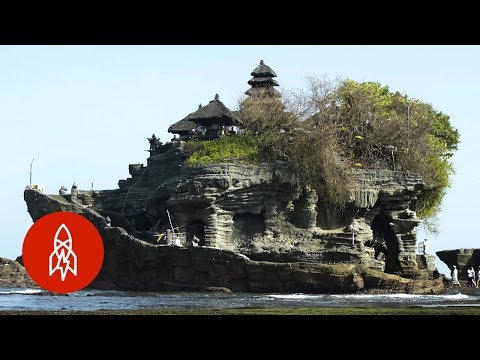
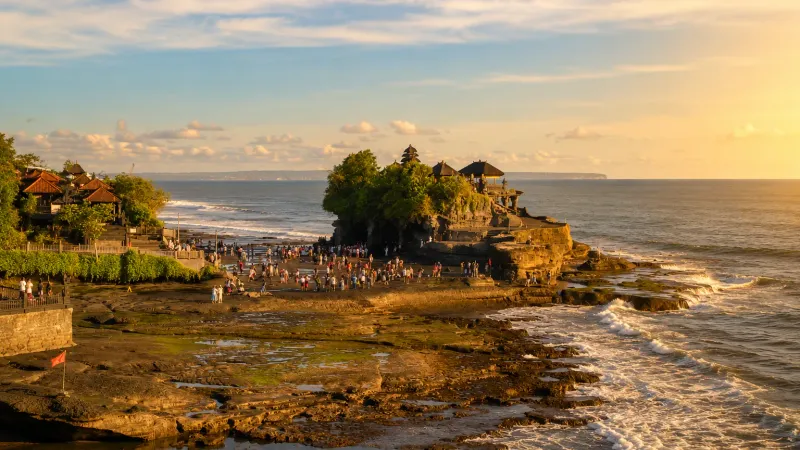
There is a specific moment in the late afternoon along Bali’s southwest coast when the humid air slows down, and the relentless crash of the Indian Ocean turns into a steady rhythm. That is usually when you get your first look at Tanah Lot. Rising abruptly from the surf on a craggy islet, this 16th-century Hindu shrine looks less like something built by human hands and more like a natural extension of the stone itself.It is arguably one of the most photographed spots on the island, and for good reason. Yet, standing on the shoreline with the salt spray hitting your face, the place manages to feel larger and more grounded than any postcard can capture.
Wandering the Craggy Shoreline
At high tide, the temple is completely cut off, stranded in a swirl of white foam and deep blue water. But if you time it right and arrive during low tide, the receding waters expose a slippery, seaweed-draped stone path. You can walk right up to the base of the main formation.Down in the rocky hollows beneath the temple, local priests guard a freshwater spring that bubbles up miraculously right out of the salty ocean floor. For a small donation, you can receive a blessing of holy water and a few grains of rice pressed onto your forehead. Nearby, in the dark crevices of the rocks, live the sacred sea snakes—believed to be the guardians of the temple, keeping evil spirits at bay.
The Sunset Ritual
By 5:00 PM, the crowds begin to thicken. Everyone is looking for the perfect vantage point along the cliffside paths. It gets busy, and there is no point pretending you will have the place to yourself. But instead of letting the selfie sticks distract you, look at the sky.As the sun dips toward the horizon, the entire landscape shifts into a silhouette. The temple darkens into a sharp, dramatic outline against an orange and violet sky. It is a shared collective silence among hundreds of strangers, broken only by the roar of the waves below.
No, the interior and the upper tiers of the temple are strictly reserved for Balinese worshippers attending religious ceremonies. Tourists can only explore the base of the rock formation during low tide.
As of recent rates, the ticket price for international adults is IDR 75,000 and IDR 40,000 for children. Domestic visitors have a separate, lower rate.
Yes. While you might miss the classic golden sunset, the overcast skies and moody atmosphere often give the crashing ocean and the temple a dramatic, ancient feel that is great for photography.
It is roughly 15 kilometers away, which usually takes around 30 to 45 minutes by scooter or car, depending on local traffic conditions along the smaller village roads.
Yes, there are numerous local cafes, small warungs, and international beverage chains along the cliffs offering food, drinks, and prime views of the temple.