
Nusa Penida

Nusa Penida

Nusa Islands · Bali

Nusa Penida isn't Bali's easiest island to reach, but that's part of what makes it worthwhile. A 30-minute boat ride from Sanur takes you to limestone cliffs, turquoise bays, and some of the best diving in Southeast Asia [1]. The island is rugged—roads are narrow, infrastructure is minimal, and you won't find chain restaurants or big resorts. What you will find is space to move around without crowds, local food that tastes like locals actually cook it, and water so clear you can see 30 meters down.

Most travelers spend 2-3 days here. That's enough time to do a diving trip, visit one or two beaches, eat at a few warungs, and get a sense of how people actually live on the island. You can base yourself in one village—Ped or Sampalan are central—and take day trips from there. Or if you're confident on a scooter, you can move around and stay in different spots. Either way, pack patience for slow internet, bring cash (ATMs are limited), and expect small guest houses rather than manicured hotels.

Quick Facts

📍
Location
Nusa Islands, 15 kilometers southeast of Denpasar across the Badung Strait. Fast boat access from Sanur Beach, 30-45 minutes.
Nusa Islands
🌿
Atmosphere
QuietNatureCoastal
Best For
CouplesSolo TravelersAdventurePhotographersDiversHikers
✈️
From Airport
Drive or taxi to Sanur Beach (30-40 minutes from Ngurah Rai Airport, ~25 km). Then fast boat to Nusa Penida (30-45 minutes).
📍 Nusa Penida on the Map
Loading map…

Why Visit Nusa Penida?

Nusa Penida rewards travelers who like to move under their own pace and aren't after nightlife or shopping. The reasons to come here are specific, which is why it works so well for certain types of visitors.

  • For Divers: Manta Point is the draw here. Between March and November, manta rays gather at specific reef sites, and the visibility can reach 25-40 meters [4]. Beyond manta season, the island has plenty of macro diving (nudibranchs, seahorses, pipefish) and wall dives along the northern coast. Several dive operators work from Ped and other villages.
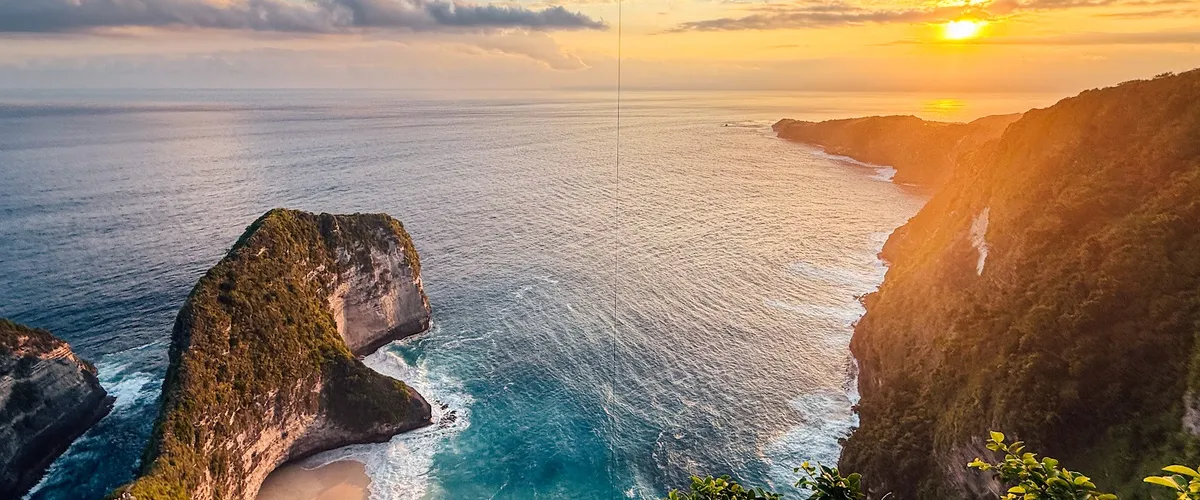
  • For Photographers: The cliffs alone justify the trip. Kelingking Beach on the west coast has a rock formation that looks like a T-Rex head jutting into the water—it's become iconic. Broken Beach (Pasir Putih) has a natural rock arch and azure water. At sunrise or late afternoon, the light on these formations is worth getting up early or staying late for.
  • For Hikers: Trails connect villages and lead down to beaches and hidden coves. The trek down to Kelingking Beach is steep and can be slippery, but the payoff is a secluded sand beach with few visitors. Some routes are marked; others require local guidance.
  • For Couples Seeking Quiet: Small beach coves, no crowds, local warungs with decent seafood, and the simple pace of the island make it appealing for couples looking to get away from Bali's busier areas.
  • For Those Interested in Local Life: You'll interact with locals more naturally here. Vendors aren't aggressive. Conversations happen in warungs. You get a clearer sense of what day-to-day Bali is actually like outside the tourist infrastructure.

Highlights

Key Spots on Nusa Penida

Kelingking Beach

Located on the west coast, Kelingking offers a dramatic rock formation and a hidden sand beach below. The rock genuinely looks like a dinosaur head, which is why it's become one of the most photographed spots on the island. The descent involves steep stairs carved into the cliff and a rope section—it's doable but requires care, especially in wet conditions. The beach itself is small and isolated, backed by vertical cliffs. Bring water because there's no shade and nowhere to buy food.

Broken Beach (Pasir Putih)

A natural rock arch frames turquoise water at this location in the southeast. The name comes from the broken-looking arch formation. It's accessible by motorbike or driver and requires a short walk down. The water here isn't ideal for swimming—there's a current and the beach is more about the view than entering the water—but the photograph from the top of the arch is stunning.

Manta Point

A dive site rather than a land-based location, Manta Point sits northeast of the island. Giant manta rays gather here, typically from March through November [4]. Dives run from several operators based in Ped. A typical dive costs 500,000-700,000 IDR depending on the operator. There's no guarantee you'll see mantas even during season, but when you do, it's unforgettable. The visibility here is often excellent, and the reef supports diverse fish life beyond the mantas.

Pura Penataran Ped

This temple in the village of Ped is one of the oldest on the island and sits on a clifftop with views of the Badung Strait [2]. Visitors are welcome with appropriate dress (sarong and covered shoulders). The temple is actively used by locals, so timing your visit to avoid ceremonies is respectful. The setting alone—perched above water with little development around it—makes it worth visiting.

Atuh Beach

On the eastern side, Atuh Beach offers calm water and a quieter atmosphere than Kelingking. You reach it by paying a small fee to a local family and walking down a steep track. The sand is coarse in places, and the beach is small, but the water is swimmable and you'll rarely see crowds here. Bring your own food and drinks.

Things To Do in Nusa Penida

Activities and Daily Plans

Diving and Snorkeling

This is what many people come for. Dive operators run boats daily from Ped and Sampalan. Manta season (March-November) is busy, so book ahead if you're traveling then. If you're not a diver, snorkeling trips run to shallower reefs and cost around 350,000-450,000 IDR per person. The reefs closest to shore hold plenty of fish even outside manta season. Underwater, you'll see trumpetfish, pufferfish, reef sharks (small and harmless), and depending on the site, pelagic fish cruising the drop-offs [4].

Motorbike Exploration

If you ride, renting a scooter (70,000-100,000 IDR per day) lets you move between sites at your own pace. Roads are narrow and potholed in places, and there's no center line marking. Drive carefully, especially on uphill sections where visibility is limited. Gas stations are in villages—not everywhere. The ride between the western cliffs and the eastern beaches takes about 45 minutes to an hour depending on which route you take.

Guided Tours

Most hotels and warungs can arrange a driver with a jeep or minivan for a full day, typically 600,000-1,000,000 IDR. A driver knows the rough roads, stops at viewpoints, and can navigate to less obvious beaches. If you don't speak Indonesian and want to avoid the hassle of a motorbike, this is the best option.

Hiking and Beach Walks

Trails between villages are negotiable without a guide if you're comfortable with loose footing and steep descents. Many lead to beaches. The walk from Ped to Sampalan along the north coast is scenic. Some villages have homestay owners or guides who arrange hikes to specific locations. These usually cost 200,000-400,000 IDR and take 3-5 hours depending on the route.

Local Food

Eat at warungs where locals eat. You'll get fresh fish grilled or cooked in coconut broth, rice, local vegetables, and tropical fruit. Meals cost 40,000-80,000 IDR. A few restaurants in Ped and Sampalan are set up for tourists with English menus, but the family-run places have more character. Ask your host where they eat breakfast—that's usually your best bet for honest local food at fair prices.

Best Places To Visit Nearby

  • Nusa Lembongan (island, 20 minutes by boat)
  • Bingin Beach (southern Bali, 1 hour by road)
  • Uluwatu Temples (southern Bali, 1.5 hours by road)
  • Gili Meno (Gili Islands, 2.5 hours by boat - rare route)
  • Candi Dasa (east Bali, 1.5 hours by road)

About Nusa Penida

Nusa Penida: Bali's Rugged Island Escape

Nusa Penida sits about 15 kilometers southeast of Denpasar and is one of three islands in the Nusa Islands group [1]. The island stretches roughly 16 kilometers long and is characterized by dramatic limestone cliffs that rise sharply from the sea, creating some of the most distinctive coastal views in the Bali region [2]. Unlike the more developed southern beaches of Bali, Nusa Penida remains wilder and less crowded, with roads that wind through villages and past rice fields before opening onto cliff vistas.

The island's geology tells a story of volcanic activity and tectonic movement. You'll notice the yellowish-white limestone formations immediately—these aren't volcanic rock but ancient sedimentary deposits that have been carved by centuries of wind and waves [3]. The terrain is hilly and can be rough in places, so getting around requires either renting a scooter, booking a driver, or joining a guided tour. Most visitors come by fast boat from Sanur Beach, a journey of about 30-45 minutes depending on sea conditions.

What Makes It Different

Nusa Penida feels separate from Bali in a real way. The Badung Strait creates more than just a physical distance—it's a different world. The island has fewer luxury resorts, no shopping malls, and limited nightlife. What you get instead is access to water sports and land-based exploration that's more adventurous. The diving here is world-class. Sites like Manta Point attract seasonal manta rays from March to November [4], and the underwater topography ranges from shallow reefs to dramatic drop-offs where pelagic fish patrol.

The local population is around 50,000 people spread across multiple villages. Many support themselves through fishing, farming, and increasingly through tourism. You'll find warungs (small restaurants) serving local food, homestays run by families, and a few mid-range hotels. This has changed quickly in the last decade as more travelers discovered the island, but infrastructure remains basic by Bali standards—electricity and water supply can be inconsistent in some areas, so it's worth asking ahead if you're booking accommodation.

Culturally, Nusa Penida is predominantly Hindu Balinese, and the island is home to several important temples. Pura Penataran Ped, located in the village of Ped, is one of the oldest temples in the region [2]. You'll see locals making offerings at small shrines and family temples. Religious ceremonies happen regularly, especially around Balinese holidays. Respectful visitors are usually welcome to observe, though dress codes apply—covered shoulders and sarongs for temple visits.

References

  1. Nusa Islands - Geography and LocationWikipedia - Nusa Islands (June 2024)
  2. Temples and Cultural Sites of Nusa PenidaBali Tourism Board (June 2024)
  3. Geology of Bali and the Nusa IslandsGeological Society of Indonesia (June 2024)
  4. Manta Point Diving - Seasonal Patterns and Marine LifeLonely Planet Diving Guides (June 2024)
Pics: StephenStewart

🗓 Best Time to Visit

April to October (dry season) offers the best water visibility and calmest seas. Manta season runs March to November, peaking June-August. November to March is wet season with higher rainfall, rougher seas, and fewer boats. April-May and September-October provide good conditions with fewer crowds than peak July-August.

💡 Local Tips

Getting There: Fast boats leave from Sanur Beach on Bali's east coast. The journey takes 30-45 minutes depending on sea conditions. Book the night before or that morning at the ticket booths along the beach. Boats typically run at 8:00 AM, 10:30 AM, 1:00 PM, and sometimes 4:00 PM. Return boats leave around 10:30 AM, 1:00 PM, and 4:00 PM. Expect to pay 150,000-200,000 IDR per person. If the sea is rough (not uncommon in the wet season), the ride gets uncomfortable. Take seasickness medication if you're prone to motion sickness.

Where to Stay: Ped has the most guesthouses and is central for reaching sites. Sampalan is quieter but more limited for food options. Expect 200,000-400,000 IDR per night for a basic but clean room with a fan and shared bathroom. Mid-range hotels run 500,000-900,000 IDR with private bathrooms, hot water, and some might have air conditioning. There are no luxury resorts on the island—if that's what you want, stay in Sanur and do a day trip.

Money and Practicalities: Only one ATM works reliably (in Sampalan), so bring cash from Bali. Most places accept card payments in Ped village, but it's not guaranteed. Mobile reception is spotty—bring a Bali SIM card or check with your provider before arriving. Bring sunscreen, a hat, and plenty of water. A good pair of shoes (not flip-flops) helps on rough trails. Pharmacies are basic, so bring any medications you might need.

Best Days: A 2-day trip allows one full day for diving or exploring and a buffer day. If you only have one day, you'll see one or two sites and that's it. Three days is comfortable—you can mix diving, beach time, and village exploration without rushing.

Respectful Visiting: The island is Hindu Balinese. Dress respectfully (covered shoulders and knees away from beaches) when visiting temples or walking through villages. During major religious ceremonies (temple anniversaries, which happen often), some sites might be closed to visitors. Ask locally before approaching temples during formal ceremonies.