Nusa Ceningan sits tucked right between Nusa Lembongan and the massive cliffs of Nusa Penida. It is the smallest of the three islands, measuring just under four kilometers long and less than one kilometer wide. Most people arrive here by taking a thirty-minute speedboat from Sanur beach on mainland Bali to the main shores of Jungut Batu or Mushroom Bay on Nusa Lembongan, and then renting a scooter to ride across the iconic Yellow Bridge. The bridge itself is barely wide enough for two motorbikes to pass each other, serving as a literal bottleneck that keeps large trucks and heavy tourist vans completely off Ceningan's roads. This structural limitation has preserved a highly peaceful, slow-paced village environment that feels light-years away from the traffic-heavy tourist corridors of the mainland.
The island's geography splits into two distinct personalities. The northern coast faces Lembongan across a protected, shallow estuary channel that experiences massive tidal shifts. When the water is high, the channel looks like a vibrant blue river filled with stand-up paddleboarders and people relaxing in overwater hammocks. When the tide drops, the water recedes for hundreds of meters, exposing vast networks of traditional seaweed farms where local villagers walk out with large wicker baskets to harvest the crops. The southern and western coasts, by contrast, face the deep, open ocean of the Badung Strait, where massive swells crash violently against sheer limestone cliffs, carving out dramatic coves and deep coastal blowholes.
The Striking Coastline of the Blue Lagoon
The most famous geographical feature on the island is the Blue Lagoon, a deep coastal cove carved into the white limestone cliffs on the southwestern tip. The water inside this rocky amphitheater has an incredibly intense, milky turquoise color caused by the sun reflecting off the fine white sand and coral silt suspended in the churning water. Standing on the cliff edge looking down into the cove gives you a raw look at the sheer power of the ocean, as massive waves roll in from the open sea and explode against the rock walls, sending white spray high into the air. While the currents and sharp rocks make the lagoon entirely unsafe for swimming or wading, it remains one of the most visually captivating coastal viewpoints anywhere in Indonesia.
Cliff Jumping and Ocean Swells at Mahana Point
Just a short ride around the headland from the lagoon lies Mahana Point, a rugged rocky outcrop that has become a legendary spot for adventure seekers. A small, rustic warung sits right on the edge of the cliff, featuring purpose-built wooden jumping platforms that hang directly over a deep ocean channel. When the tide is high and the water depth is safe, you can pay a small fee to leap from either a five-meter or a ten-meter platform straight into the rolling swells below. A thick safety rope and a ladder built into the rock face allow jumpers to scramble back up out of the water. For those who prefer to keep their feet dry, the cliffside tables provide a front-row seat to watch local surfers take on the fast, hollow left-hand reef break that forms just off the point.
Finding Quiet Corners at Secret Beach
If you head down a bumpy, unpaved dirt track through the scrubby forest in the center of the island, you eventually reach Secret Beach. Tucked away in a deep recess between two dense, green headlands, this small stretch of sand offers a quiet escape from the busier cliff viewpoints. The beach is composed of coarse white sand mixed with smoothed pieces of coral and seashells, sloping gently into a shallow reef flat. During low tide, deep rock pools form across the reef, creating natural aquariums filled with tiny tropical fish, crabs, and colorful sea anemone. A single low-key resort sits behind the palms, allowing outside visitors to use their beachfront pool and loungers if you buy a drink or a meal from their kitchen.
The Evening Switch to the Channel Shacks
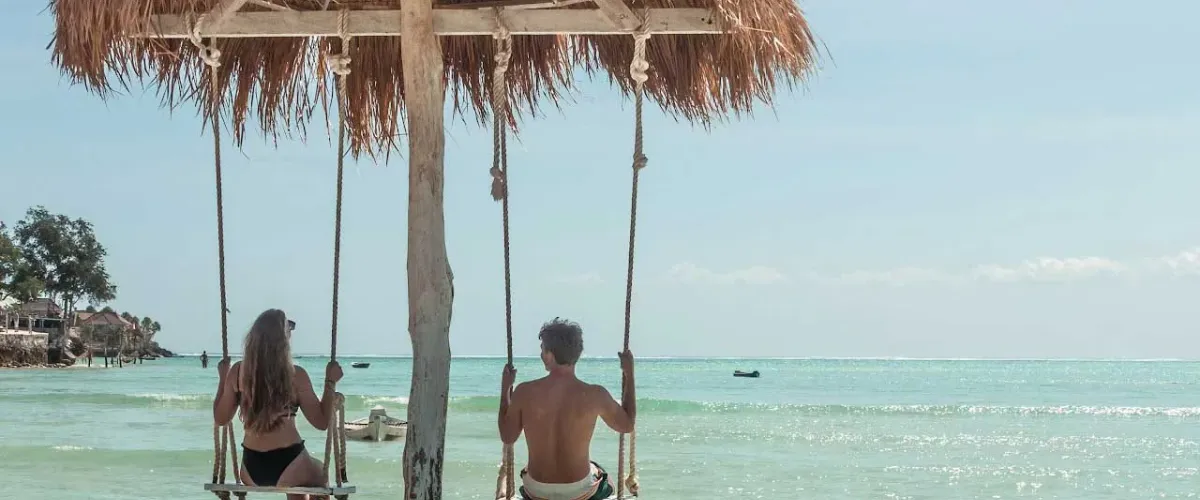
As the afternoon heat begins to soften, the social energy of the island shifts completely back to the calm northern shore along the estuary channel. A long row of colorful, independent wooden bars and warungs lines the waterfront road here, built directly over the sand on stilts. These spots have set up swings, hammocks, and beanbags right in the shallow water, creating an incredibly casual environment where you can sit with your feet submerged while the tide rolls back in. The menus are simple and unpretentious, focusing on cold beers, fresh fruit juices, and classic Indonesian dishes like mie goreng or grilled chicken satay. It is a highly social yet completely relaxed strip where travelers gather to swap stories and watch the sky change color behind the silhouette of Nusa Lembongan across the water.