Nusa Lembongan

Nusa Lembongan

Nusa Islands · Bali

Nusa Lembongan is the island version of Bali — all the beach and ocean access, none of the chaos. Fifteen kilometers southeast, a 30-minute boat ride from the mainland, and suddenly you're somewhere genuinely different. The pace is slower, the crowds are thinner, and the diving and snorkeling are serious enough that divers come here specifically for it.

It's not a destination for nightlife or shopping or Instagram resort tours. It's a destination for waking up to actual quiet, diving or snorkeling into water you can see through, sitting at a warung watching fishing boats, and feeling like you've actually left somewhere instead of just changing hotels.

The island has infrastructure — boats, dive shops, guesthouses, restaurants — but nothing oversized. That's what keeps it real. You're not one of ten thousand tourists rotating through a resort. You're just someone who came to an island because the diving is good and the vibe is honest.

Quick Facts

📍
Location
Nusa Islands, 15km southeast of Bali, 30-45 minutes by fast boat from Sanur
Nusa Islands
🌿
Atmosphere
RelaxingBeachScenicAdventureCoastal
Best For
CouplesSolo TravelersPhotographersSurfersDivers
✈️
From Airport
From Denpasar Airport, take a taxi or driver to Sanur Harbor (30-40 minutes, around $20-30). Then catch a fast boat to Lembongan (30-45 minutes, $15-25). Total travel time is roughly 1.5 hours from landing to guesthouse. Boats run roughly every 1-2 hours throughout the day.
📍 Nusa Lembongan on the Map
Loading map…

Why Visit Nusa Lembongan?

Manta rays and pristine reef systems that are reliable enough that divers come here specifically. The dive sites are 10-20 minutes by boat, not hours away, and even snorkelers see turtles and tropical fish from the beach.

The mangrove ecosystem is one of Bali's most intact. Paddling through mangrove channels watching monitor lizards and seeing dolphins offshore isn't a tourist theater — it's a functioning ecosystem that happens to be accessible.

Quiet that actually exists. No roaring motorbikes, no all-night bars, no vendor swarms. Night falls and the island gets genuinely quiet. Sunrise is a simple thing — you just step outside and watch.

Budget-friendly without feeling cheap. Meals for $3-6, scooter rental for $6 a day, guesthouses with character for $20-30 a night. You're not paying resort prices for a stripped-down experience.

Close enough to Bali that getting there is easy (30 minutes by boat), far enough that it feels genuinely separate. You can come for 3 days as a side trip or settle in for a week. Either way, the island doesn't demand much planning.

A real island — not a beach resort with tourist infrastructure glued on top. The roads are narrow, the buildings are modest, and the people who live here aren't primarily performing tourism. You're actually in a place, not a destination.

Highlights

World-class diving with manta rays, pristine coral, and water clarity that lets you see 40+ meters down

Mangrove ecosystem tour with yellow bridge, monitor lizards, and active fishing communities

Accessible snorkeling from the beach — sea turtles and tropical fish without needing a boat

Genuine quiet and slower pace — no taxis, no crowds, no nighttime noise pollution

Budget-friendly island escape ($15-30 for guesthouses, $3-6 for meals, $6/day scooter rental)

Things To Do in Nusa Lembongan

Diving on the reef systems around Lembongan and Penida

Snorkeling from the beach or on guided boat tours

Mangrove paddling and yellow bridge swing

Surfing at Shipwrecks and other beach breaks

Island hopping to Nusa Ceningan and Nusa Penida

Sunrise watching from your guesthouse or the beach

Eating at local warungs and talking to the owners

Renting a scooter and getting lost exploring the island

Visiting the temple at Pura Ped

Watching the fishing boats come in at dawn

Best Places To Visit Nearby

  • Nusa Penida
  • Nusa Ceningan
  • Sanur
  • Candi Dasa
  • Padang Bai

About Nusa Lembongan

The Island That Feels Separate From Bali

Nusa Lembongan sits about 15km southeast of Bali's coast, and that distance matters. Technically you're still in the Bali region, but the moment your boat hits the island, the pace shifts. There are no motorbikes roaring past, no touts calling out from storefronts, no sprawling resort complexes. What you get instead is an actual island — narrow lanes where people know each other, simple warungs run by families who've been there for decades, and genuine quiet at night.

The island's reputation runs on three things: diving, snorkeling, and the mangrove ecosystem. The reefs around Lembongan and its neighbors (Nusa Penida and Nusa Ceningan) hold some of Indonesia's most consistent diving. Manta rays show up predictably during certain seasons, the coral gardens are dense and colorful, and the water clarity is usually stunning. Even if you're not a diver, the snorkeling from shore is serious — you can see turtles, tropical fish, and decent coral without ever getting in a boat.

Why the Island Works as an Escape

Staying on Lembongan forces a slower itinerary. There are no taxis, so you move on foot or scooter. The roads are narrow and sometimes rough. Restaurants close early. This isn't a bug — it's the feature. You're not fighting crowds for beach space or negotiating prices with ten vendors in an hour. Instead you're sitting at a small warung watching the sunset, or diving into water so clear you can see 40 meters down.

The tourist infrastructure exists — hotels, dive shops, tour operators — but it stays modest. No mega-resorts, no nightclub districts, no Instagram hotspot stampedes. That means prices stay reasonable, and the experience stays genuine. You'll see other travelers, but not thousands of them competing for the same photo.

The Main Draws Actually Deliver

Yellow Bridge (the mangrove swing you've probably seen online) is real and it does look that good, but Lembongan has substance beyond the Instagram shot. The mangrove ecosystem here is one of Bali's most intact — you paddle through channels surrounded by pristine trees, see monitor lizards, and occasionally spot dolphins offshore. Most mangrove tours cost $15-25 and take 1.5 hours.

Diving here isn't just accessible, it's world-level. The reef systems around Lembongan attract manta rays, reef sharks, turtles, and schooling fish. The dive sites are a short boat ride away — usually 10-20 minutes maximum. Even intermediate divers find plenty of sites that work. Snorkeling from the beach can be productive too; the shallow reefs near the southern shore hold turtles and tropical fish year-round.

Surfing happens at Shipwrecks and other beach breaks, with waves that suit beginners through intermediates. The island's eastern side faces consistent swells, especially during the dry season. If you're not a surfer, the beaches themselves are quiet and functional — not Instagram-perfect, but genuinely peaceful.

The Logistics Are Straightforward

Getting there: Fast boats leave from Sanur (South Bali) throughout the day. The crossing takes 30-45 minutes depending on the operator and sea conditions. It costs around $15-25 per person one-way. From the airport you'd take a taxi or driver to Sanur (30-40 minutes) and then catch the boat. Total travel time from landing is roughly 1.5 hours.

Once on the island, you move by foot or rented scooter. The scooter rentals run $5-8 per day and the island is small enough that nothing is more than 15 minutes away. Accommodation ranges from budget guesthouses ($15-30/night) to mid-range bungalows ($50-100) to a few upscale island resorts. The mid-range options offer the best balance — clean, decent views, decent wifi, actual hot water.

Food is cheap and straightforward. A full meal at a local warung runs $3-6. There are a few international-friendly restaurants (pasta, burgers) for around $7-12. You'll eat well without spending much. Water is safe to drink in most places, though asking your guesthouse is safer than assuming.

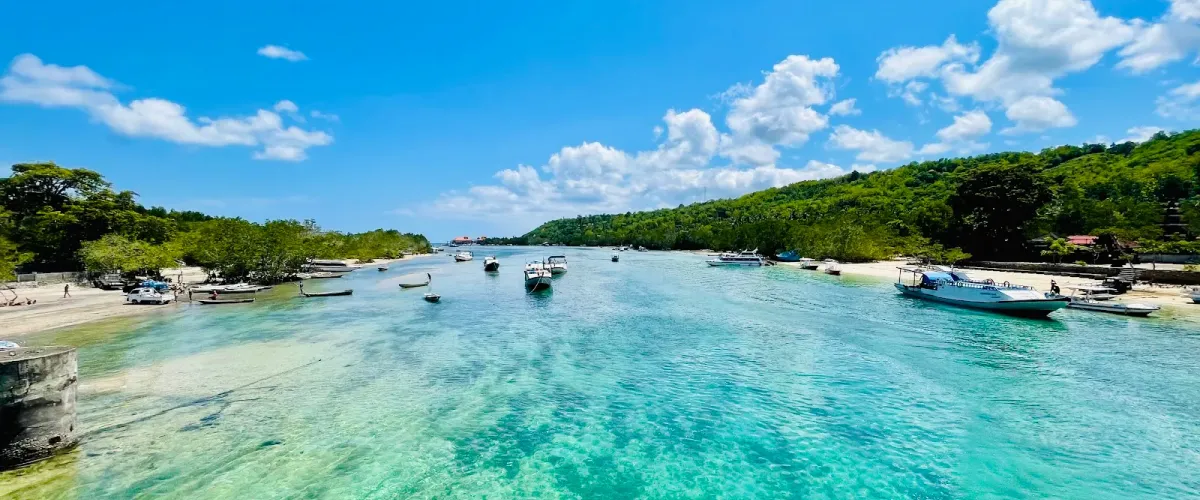
Pics: Angela Fordham

🗓 Best Time to Visit

The dry season from May to September offers the best diving and calmest sea conditions. Manta rays are most common April-May and August-September. June-August is peak season, so book accommodation early if traveling then. November-March is the rainy season with less predictable diving but also fewer tourists and lower prices. The shoulder months (April-May and September-October) offer good weather and fewer crowds.

💡 Local Tips

The boats from Sanur (Jungutbatu Harbor) run throughout the day, but early morning crossings (7-8am) tend to be calmer and faster. Afternoon crossings can get choppy if the wind picks up. Book the night before if you're traveling on a specific day.

If you're diving, do it early in your stay so you have time to acclimatize before going deep. The dive operators here are solid and accidents are rare, but currents and depth require respect. Most sites are 12-20 meters and suitable for intermediate divers with experience.

The mangrove tours are better in the afternoon when the light is softer and the mangrove birds are more active. Morning tours work fine too, but skip the midday slot — you're paddling in direct sun with no shade.

Rent a scooter if you can drive one safely. The island is small enough that you can explore the whole thing in a few hours, and scooter rental is cheaper than hiring a guide for each trip. Roads are rough in some spots but manageable if you ride carefully.

The island has limited ATMs and some don't work reliably. Bring enough cash from Sanur or the airport to cover your stay, or expect to pay card transaction fees at guesthouses or dive shops. Most places take cash, some take cards, none have perfect systems.

Accommodation fills up during peak season (July-August) and during good diving seasons (April-May for mantas, June-September generally). Book ahead if you're traveling then. Off-season (November-March) you'll find availability and better prices, though rain is more frequent.