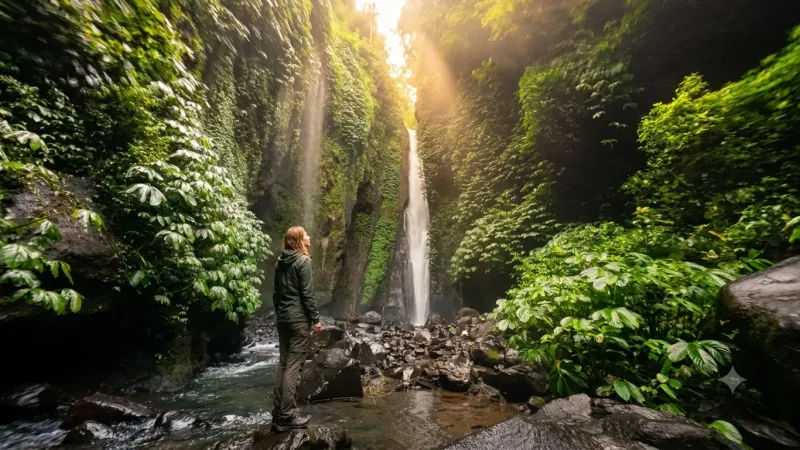



Discovering Northern Bali's Definitive Cascade
Getting to this pocket of the northern highlands takes a solid two to three hours from the southern coastal hubs, but the shift in climate and pace makes it feel a world away. Long before you trace the steps down to the canyon floor, the deep rumble of tumbling water echoes through the valley. It is a massive natural system where multiple distinct flows pierce through vertical walls of volcanic rock, fed by upland mountain streams that keep the currents powerful almost year-round.
Navigating the Trails and Viewpoints
The local community manages the access paths carefully, offering a few distinct options depending on how deep you want to explore. If you simply want to see the main drop from a distance, a short walk from the upper registration area leads to a clearing that frames the primary twin falls dropping roughly eighty meters into the ravine. For those moving down into the gorge, the path transitions into steep, concrete steps that can become quite slick from the constant mountain mist. Down at the base, the air is thick with spray, and crossing the shallow rivers requires stable, water-ready footwear to safely navigate the wet boulders.
Connecting to Hidden and Fiji Cascades
The geography of the valley rewards a longer trek. Following the river trail upstream leads to a separate, narrower chasm known as the Hidden Waterfall, where water plunges through a tighter rock formation. Continuing further across the village boundary opens up into the Fiji sector, where three separate streams cascade side by side down an expansive amphitheater of green vines and moss. Choosing a full trek requires a local guide, which keeps the paths safe while ensuring entry fees directly support the families living in the surrounding hills.